
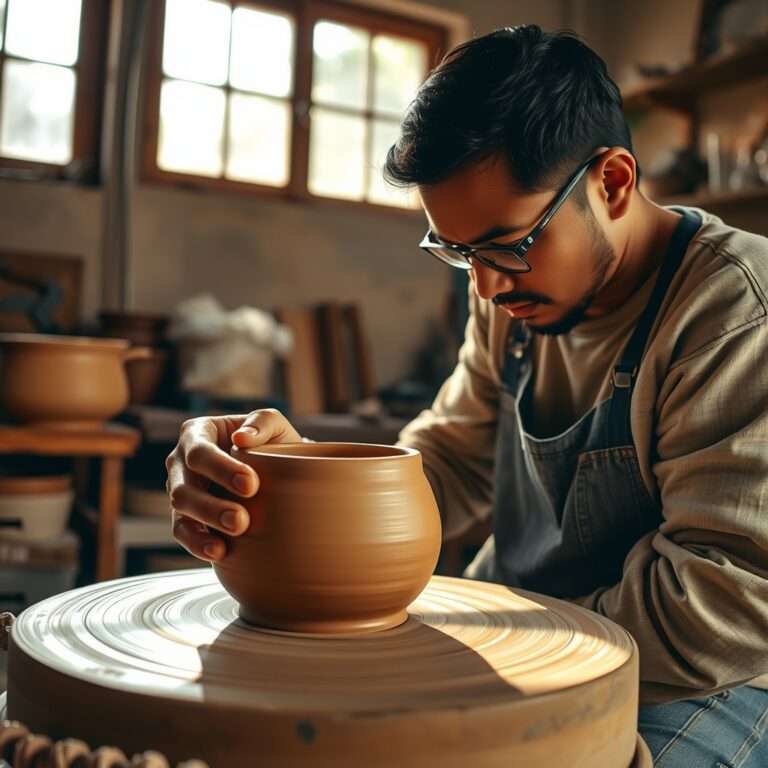
In today’s fast‑moving consumer market, brands can no longer rely on off‑the‑shelf solutions to stand out. The rise of custom ceramic manufacturing offers a powerful way to create distinctive, high‑performance products that reflect a brand’s identity and values. Yet many companies struggle to find a partner that blends technical expertise, reliable supply chains, and sustainable practices. That’s where Java Sari Clay steps in—providing world‑class custom ceramic manufacturing services that turn design concepts into market‑ready realities for global brands.
Why Brands Need Custom Ceramic Manufacturing
Standard ceramic parts often fall short of the nuanced requirements of premium brands. Whether it’s a unique glaze, precise dimensional tolerances, or a specific thermal resistance, generic production can compromise aesthetics, functionality, and brand perception. Custom ceramic manufacturing solves these challenges by allowing brands to:
- Tailor material composition to match performance targets.
- Integrate brand‑specific colors, textures, and finishes.
- Scale production while maintaining strict quality controls.
- Reduce time‑to‑market through streamlined prototyping.
When a brand invests in a dedicated ceramic partner, it gains a competitive edge that resonates with consumers who value craftsmanship and innovation.
About Java Sari Clay – History and Capabilities
Founded in 1998 in the heart of Indonesia’s ceramic belt, Java Sari Clay has grown from a small family workshop into a multinational custom ceramic manufacturing hub. The company’s core strengths include:
- State‑of‑the‑art kilns capable of reaching 1,400 °C with precise temperature profiling.
- A research and development team that collaborates with material scientists to formulate proprietary clay blends.
- In‑house design studios equipped with 3D modeling and rapid prototyping tools.
- Robust logistics that serve markets across North America, Europe, and Asia.
Java Sari Clay’s commitment to continuous improvement has earned ISO 9001, ISO 14001, and CE certifications, reinforcing its reputation as a trustworthy partner for high‑profile brands.
The End‑to‑End Process of Custom Ceramic Manufacturing
From concept to finished product, Java Sari Clay follows a transparent, collaborative workflow that minimizes risk and maximizes creativity.
1. Concept Development and Design Consultation
Brands begin with a design brief outlining functional goals, aesthetic preferences, and sustainability targets. Java Sari Clay’s design engineers translate these requirements into 3D CAD models, offering material suggestions and cost forecasts.
2. Material Selection and Formulation
Using its extensive library of raw clays, additives, and pigments, the R&D team creates a custom formulation that meets the desired thermal, mechanical, and visual properties. This step is critical for custom ceramic manufacturing because even minor variations in composition can affect shrinkage rates and glaze adherence.
3. Prototyping and Testing
Rapid prototyping techniques—such as slip casting, extrusion, and additive manufacturing—allow brands to evaluate form, fit, and finish within weeks. Each prototype undergoes rigorous testing for strength, porosity, and thermal shock resistance.
4. Tooling and Production Setup
Once the prototype is approved, Java Sari Clay invests in precision tooling, including CNC‑milled molds and custom dies. Production parameters are fine‑tuned to ensure repeatability across large batches.
5. Mass Production and Quality Assurance
The final stage involves high‑volume firing, glaze application, and inspection. Every batch is subjected to statistical process control (SPC) and non‑destructive testing (NDT) to guarantee compliance with brand specifications.
Quality Assurance & Certifications
Quality is the cornerstone of any successful custom ceramic manufacturing partnership. Java Sari Clay’s QA framework includes:
- Real‑time monitoring of kiln temperature curves.
- Automated visual inspection using AI‑driven image analysis.
- Batch‑level documentation of material traceability.
- Third‑party audits for ISO 9001 (Quality Management) and ISO 14001 (Environmental Management).
These measures ensure that every ceramic component not only meets but often exceeds the rigorous standards set by global brands.
Sustainable Practices in Ceramic Production
Environmental responsibility is no longer optional for leading brands. Java Sari Clay integrates sustainability at every stage of its custom ceramic manufacturing process:
- Raw material sourcing: Locally mined, low‑impurity clays reduce transportation emissions.
- Energy efficiency: Waste‑heat recovery systems capture up to 30 % of kiln exhaust energy.
- Water recycling: Closed‑loop water treatment reuses >90 % of process water.
- End‑of‑life recycling: Broken or excess ceramics are crushed and re‑incorporated into new batches.
These initiatives help brands achieve their own sustainability goals while delivering products with a smaller carbon footprint.
Case Studies of Global Brands
Java Sari Clay’s portfolio showcases a diverse range of successful collaborations. Below are three illustrative examples.
| Brand | Product Category | Custom Solution | Result |
|---|---|---|---|
| LuxHome Interiors | Luxury Tableware | Hand‑glazed porcelain with a patented matte finish | 15 % sales lift in Q3 2023; award‑winning design |
| EcoTech Appliances | High‑temperature Cookware | Silica‑reinforced ceramic core with rapid‑heat technology | Reduced energy consumption by 22 %; extended product life |
| VividPlay Toys | Interactive Ceramic Puzzle | Bright, non‑toxic glazes with custom snap‑fit geometry | Exceeded safety standards; 30 % market share growth |
Each case underscores how custom ceramic manufacturing can translate brand vision into tangible market success.
Choosing the Right Partner for Custom Ceramic Manufacturing
Selecting a manufacturing partner is a strategic decision. Brands should evaluate potential partners against the following criteria:
- Technical expertise: Does the partner have a proven track record in complex ceramic formulations?
- Scalability: Can they ramp production without compromising quality?
- Transparency: Are process data and timelines shared openly?
- Sustainability credentials: Do they hold relevant environmental certifications?
- Support services: Is there access to design assistance, prototyping, and post‑production logistics?
Java Sari Clay scores highly on all these fronts, making it a preferred choice for brands seeking reliable custom ceramic manufacturing solutions.
Frequently Asked Questions (FAQ)
What is the typical lead time for a custom ceramic project?
Lead times vary by complexity, but most projects move from concept to pilot production within 8–12 weeks. Full‑scale production can be launched within 4–6 months after design approval.
Can Java Sari Clay handle low‑volume, high‑mix orders?
Yes. The company’s flexible tooling and rapid prototyping capabilities make it ideal for limited‑edition runs or experimental designs.
How does the company ensure consistency across large batches?
Through statistical process control, automated kiln monitoring, and batch‑level material traceability, every piece meets the same stringent specifications.
Is it possible to incorporate recycled materials?
Java Sari Clay offers a “green blend” option that incorporates up to 20 % post‑consumer ceramic waste without sacrificing performance.
What certifications does Java Sari Clay hold?
ISO 9001 for Quality Management, ISO 14001 for Environmental Management, and CE marking for product safety in the European market.
Conclusion & Call to Action
In a marketplace where differentiation is key, custom ceramic manufacturing provides brands with the flexibility, quality, and sustainability they need to thrive. Java Sari Clay combines decades of expertise, cutting‑edge technology, and a deep commitment to environmental stewardship, making it the ideal partner for any brand looking to elevate its product line.
If you’re ready to transform your design ideas into high‑impact ceramic products, contact Java Sari Clay today. Let’s create the next generation of iconic ceramics together.


