
When a brand decides to offer custom pottery quality standards as a differentiator, the stakes are high. From boutique cafés in Paris to massive retail chains in Tokyo, every client expects flawless craftsmanship, consistent glaze, and reliable durability. Yet achieving that level of perfection is far from simple. In this guide we unpack the rigorous processes, international regulations, and cutting‑edge technologies that enable us to maintain the highest custom pottery quality standards for customers around the world.
Understanding Custom Pottery Quality Standards
Before diving into the specifics of our quality system, it helps to define what custom pottery quality standards actually encompass. In essence, they are a collection of measurable criteria that guarantee each piece meets the client’s design intent, functional requirements, and safety regulations. These standards cover everything from raw material purity to final packaging.
Why Quality Matters in Custom Pottery
Custom pottery is more than a decorative object; it often serves a functional purpose—think of hand‑crafted mugs that hold hot coffee or decorative tiles that endure outdoor weather. Poor quality can lead to cracks, glaze crazing, or even health hazards if toxic materials leach out. For global brands, a single defect can damage reputation, trigger costly recalls, and erode consumer trust.
Key Elements of Quality Standards
- Material Consistency: Clay body composition, water content, and additives must stay within tight tolerances.
- Dimensional Accuracy: Measurements must align with CAD specifications, typically within ±0.2 mm.
- Glaze Uniformity: Color, thickness, and gloss level are monitored through spectrophotometry.
- Structural Integrity: Kiln firing cycles are calibrated to avoid warping or stress fractures.
- Compliance: Products must meet ISO 9001, ASTM C‑210, and regional safety directives.
The Global Landscape of Pottery Quality Regulations
Operating across continents means navigating a patchwork of standards. While the core principles of durability and safety remain universal, each market imposes its own nuances.
International Standards (ISO, ASTM)
ISO 9001 provides the overarching quality management framework, while ASTM C‑210 specifically addresses ceramic tile performance. Both are frequently referenced in contracts for custom pottery, ensuring a baseline of consistency.
Regional Requirements
- European Union (EU): REACH compliance for hazardous substances and CE marking for safety.
- United States (US): FDA regulations for food‑contact ceramics and ASTM standards for thermal shock resistance.
- Asia-Pacific: China’s GB standards for lead‑free glaze and Japan’s JIS criteria for porcelain strength.
Our compliance team continuously monitors updates to these regulations, integrating changes into our production SOPs within 30 days of publication.
Our Quality Assurance Process
Maintaining custom pottery quality standards is a systematic journey that begins long before the first wheel‑throw and ends only after the product reaches the client’s doorstep.
Raw Material Selection
We source clay, feldspar, and silica from certified mines that provide batch‑specific Certificates of Analysis (CoA). Each shipment undergoes:
- Moisture content testing (target 12 % ± 0.5 %).
- Particle size distribution analysis using laser diffraction.
- Heavy‑metal screening to ensure lead, cadmium, and arsenic are below regulatory limits.
Design & Prototyping
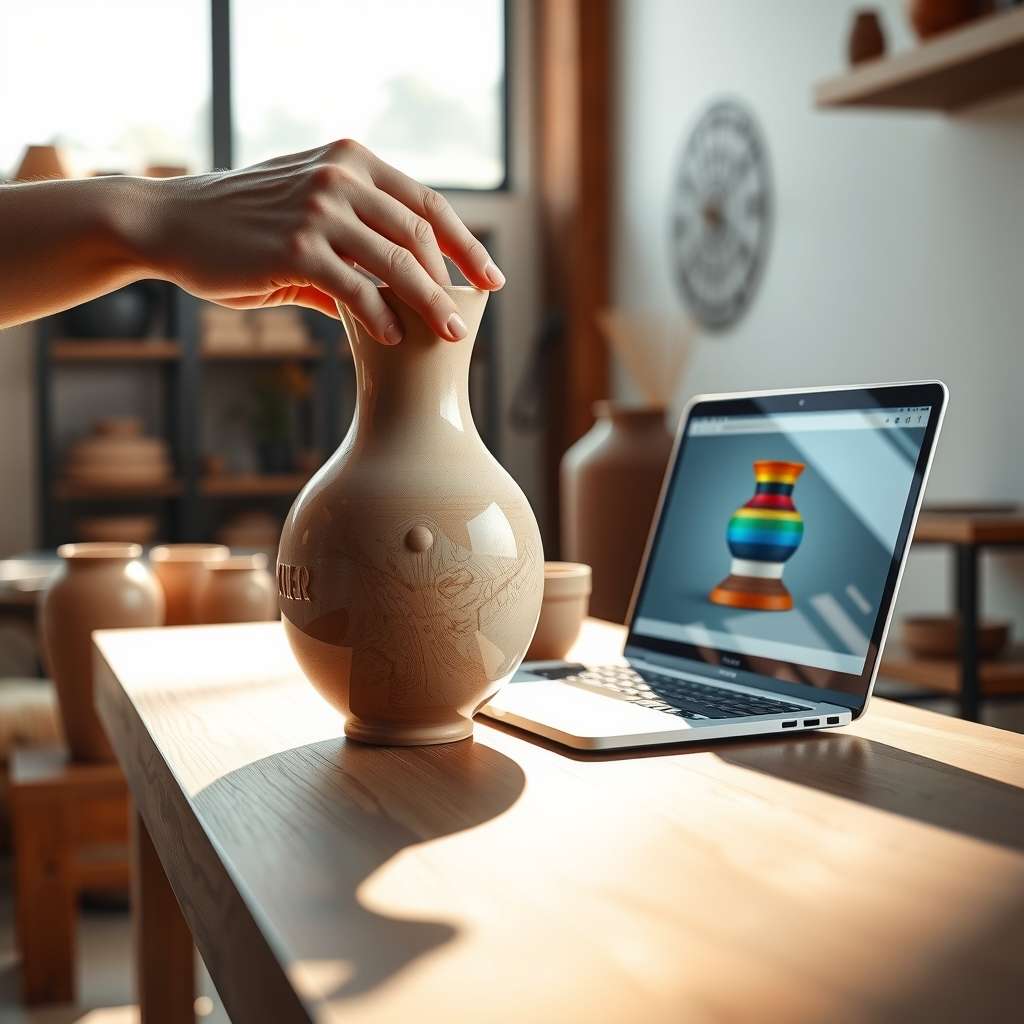
Clients upload 3‑D models or hand sketches into our secure portal. Our CAD engineers then generate a printable prototype, which is 3‑D printed in a ceramic‑compatible resin for tactile evaluation. This step reduces the risk of costly re‑runs later in the process.
Production Controls
Once the design is approved, the production line follows a strict sequence:
- Batch mixing – automated mixers ensure homogenous clay bodies.
- Pressing or wheel‑throwing – CNC‑controlled machines maintain dimensional accuracy.
- Drying – climate‑controlled chambers reduce shrinkage variance.
- Glazing – robotic spray systems apply glaze at a calibrated 150 µm thickness.
- Firing – programmable kilns follow a multi‑stage ramp to achieve the target vitrification.
In‑Process Testing
Quality checkpoints are embedded at every critical stage:
- Pre‑Dry Shrinkage Test: Measures weight loss to predict final dimensions.
- Glaze Thickness Scan: Uses ultrasonic gauging for non‑destructive measurement.
- Thermal Shock Test: Rapid temperature change to assess resistance.
- Visual Inspection: Trained inspectors use a 10‑point checklist for surface defects.
Final Inspection & Certification
After firing, each piece is photographed, measured, and logged in our ERP system. Items that pass the following criteria receive a Certificate of Conformity:
| Test | Acceptable Range | Method |
|---|---|---|
| Dimensional Tolerance | ±0.2 mm | Digital calipers |
| Glaze Color Match | ΔE < 2.0 | Spectrophotometer |
| Porosity | ≤5 % | Water absorption test |
| Lead Content | ≤0.01 ppm | ICP‑MS |
Only after this rigorous sign‑off do we package the items in double‑wall corrugated boxes with moisture‑absorbing inserts.
Tools and Technologies That Keep Standards High
Investing in advanced equipment is essential for sustaining custom pottery quality standards at scale. Below are the key technologies we employ:
- Automated Clay Mixers: Ensure uniform particle distribution and reduce human error.
- Laser Scanners: Capture 3‑D geometry for real‑time dimensional verification.
- Robotic Glaze Sprayers: Provide consistent glaze thickness and minimize overspray.
- Programmable Kilns with IoT Sensors: Monitor temperature gradients, atmosphere composition, and energy consumption.
- Artificial Intelligence (AI) Quality Analytics: Predict defect likelihood based on historical data.
- Blockchain Traceability: Immutable records of material provenance and process steps for full transparency.
Managing Client Expectations and Custom Specifications
Every client brings a unique set of requirements—brand colors, logo placement, functional load, and even storytelling elements. Our client‑centric workflow includes:
- Initial Consultation: Define scope, timelines, and budget.
- Specification Sheet: Detailed document covering dimensions, glaze codes, and performance criteria.
- Sample Approval: Physical or digital mock‑ups for client sign‑off.
- Progress Reporting: Weekly dashboards with photos, test results, and any deviation alerts.
- Final Review Meeting: Walkthrough of inspection reports and certification documents.
This transparent communication loop reduces misunderstandings and guarantees that the final product aligns perfectly with the client’s vision.
Common Defects and How We Prevent Them
Even with robust controls, certain defects can arise. Below we list the most frequent issues and our proactive countermeasures.
- Crazing (Glaze Cracking): Caused by mismatched thermal expansion. We mitigate by matching glaze coefficients of expansion to the clay body and performing a glaze‑to‑body test.
- Warpage: Results from uneven drying or firing. Our climate‑controlled drying rooms and multi‑zone kilns ensure uniform heat distribution.
- Pinholes and Bubbles: Introduced by trapped air or moisture. We use vacuum degassing during mixing and slow ramp rates during firing.
- Color Inconsistency: Often due to glaze batch variation. We implement batch‑to‑batch color matching using spectrophotometric calibration.
- Surface Roughness: May stem from poor polishing. Automated polishing stations with calibrated grit levels guarantee a smooth finish.
Sustainable Practices in Custom Pottery Production
Environmental stewardship is now a core component of our custom pottery quality standards. Sustainable initiatives include:
- Recycled Clay: Up to 30 % of waste clay is reprocessed and reintegrated.
- Energy‑Efficient Kilns: Heat‑recovery systems capture waste heat for pre‑heating raw materials.
- Low‑VOC Glazes: Formulated with water‑based binders to reduce emissions.
- Zero‑Waste Packaging: Biodegradable inserts and recyclable cardboard.
- Carbon Offsetting: Partnering with reforestation projects to neutralize production emissions.
Case Studies: Delivering Quality to Global Clients
Case Study 1 – Luxury Hotel Chain (Europe)
Goal: Supply 12,000 custom‑designed ceramic tiles for a flagship hotel lobby. Challenge: Tight tolerance of ±0.1 mm and a specific matte glaze that matched the brand’s signature teal.
Solution: Implemented AI‑driven glaze matching and used laser scanning for real‑time dimensional checks. Result: Zero defects across three production runs, on‑time delivery, and a 15 % reduction in material waste.
Case Study 2 – International Café Franchise (North America)
Goal: Produce 50,000 hand‑painted mugs with a logo that must survive dishwasher cycles.
Solution: Adopted a lead‑free, high‑temperature resistant glaze and performed accelerated dishwasher testing (100 cycles). Result: 99.8 % durability rate, with the client reporting a 20 % increase in customer satisfaction.
Case Study 3 – E‑Commerce Home Décor Brand (Asia)
Goal: Create limited‑edition decorative vases with intricate hand‑carved patterns.
Solution: Utilized CNC‑controlled carving tools and a multi‑layer glaze system to highlight depth. Result: Received a “Best New Product” award at the regional trade show, boosting sales by 35 %.
Frequently Asked Questions (FAQ)
What certifications do you hold for pottery production?
We are ISO 9001 certified, comply with ASTM C‑210, and hold regional certifications such as REACH, FDA food‑contact approval, and JIS for Japanese markets.
How do you ensure color consistency across large orders?
Our glaze lab uses spectrophotometers to measure ΔE values, aiming for a ΔE < 2.0 between batches. We also maintain a master glaze library for rapid reference.
Can you accommodate rush orders without compromising quality?
Yes. Our modular production lines allow us to prioritize urgent jobs while still performing all mandatory quality checks. Rush orders are subject to a surcharge to cover additional labor and testing.
What is the typical lead time for a custom pottery project?
Standard projects range from 8 to 12 weeks, depending on design complexity, volume, and required certifications. Prototype development usually takes 2‑3 weeks.
Do you offer eco‑friendly glaze options?
Absolutely. We have a portfolio of low‑VOC, lead‑free glazes that meet both aesthetic and environmental criteria.
Conclusion and Call to Action
Maintaining rigorous custom pottery quality standards is not a one‑time effort; it is an ongoing commitment to excellence, compliance, and sustainability. By integrating international regulations, state‑of‑the‑art technology, and transparent client communication, we consistently deliver flawless pottery that enhances brand stories worldwide.
If you are ready to elevate your product line with pottery that meets the highest quality benchmarks, contact our specialist team today. Let us turn your creative vision into a tangible masterpiece that your customers will love and trust.